ONE of America’s most prominent civil rights scholars will pay her first ever visit to Northern Ireland next week.
Professor Kimberlé Crenshaw will speak in Derry on Friday, May 29, as part of a European tour following the publication of her memoir Backtalker.

Kimberlé Crenshaw is credited with changing the way the world thinks about race. She is also responsible for naming two of the most contested ideas in American politics – intersectionality and critical race theory.
The Ohio-born author and academic will take her seat in the city’s historic Guildhall on Friday evening for an ‘In Conversation With…’ titled ‘Race, Gender and Justice’.
Hosting the evening will be Policy Officer with the African and Caribbean Support Organisation NI (ACSONI), Takura Makoni.
Organising the landmark event is CEO of the North West Migrants Forum and former Mayor of Derry City and Strabane District Council, Councillor Lilian Seenoi Barr.
Councillor Barr said, “This will be Professor Crenshaw’s first visit to Northern Ireland. At a time when conversations on race, migration, gender, belonging and equality are increasingly urgent across Ireland, north and south, this event will create space for honest dialogue, learning and reflection.”
Professor Crenshaw is a distinguished professor of law who splits her time between the UCLA School of Law in California and Columbia Law School in New York.
The idea of intersectionality came to her in the late 1980s when she was studying the 1976 Supreme Court case DeGraffenreid v General Motors. A Black woman had sued the car maker for discrimination and a federal court told her she could sue either as a Black person or as a woman, but not both at once.
In an interview with National Public Radio ahead of the release earlier this month of her memoirs, Ms Crenshaw said, “I thought, ‘How can these very smart people not get that if you’re protected against race discrimination,
you’re protected against all of it? In the same way that traffic going north and south sometimes overlaps with traffic going east to west, discrimination on the basis of race sometimes overlaps with discrimination on the basis of gender. That’s where intersectionality came from.”
A few years later, with 30 other scholars of colour, Kimberlé Crenshaw helped name a second idea, critical race theory, which argues that race is not incidental to American law, but built into it.
“If you are learning about the way that the Constitution embedded enslavement in it, despite the fact that slavery as a word never appears – that’s critical race theory. If you talk about the Montgomery bus boycott and
you talk about segregation as an anti-Black policy and practice, that is critical race theory.”
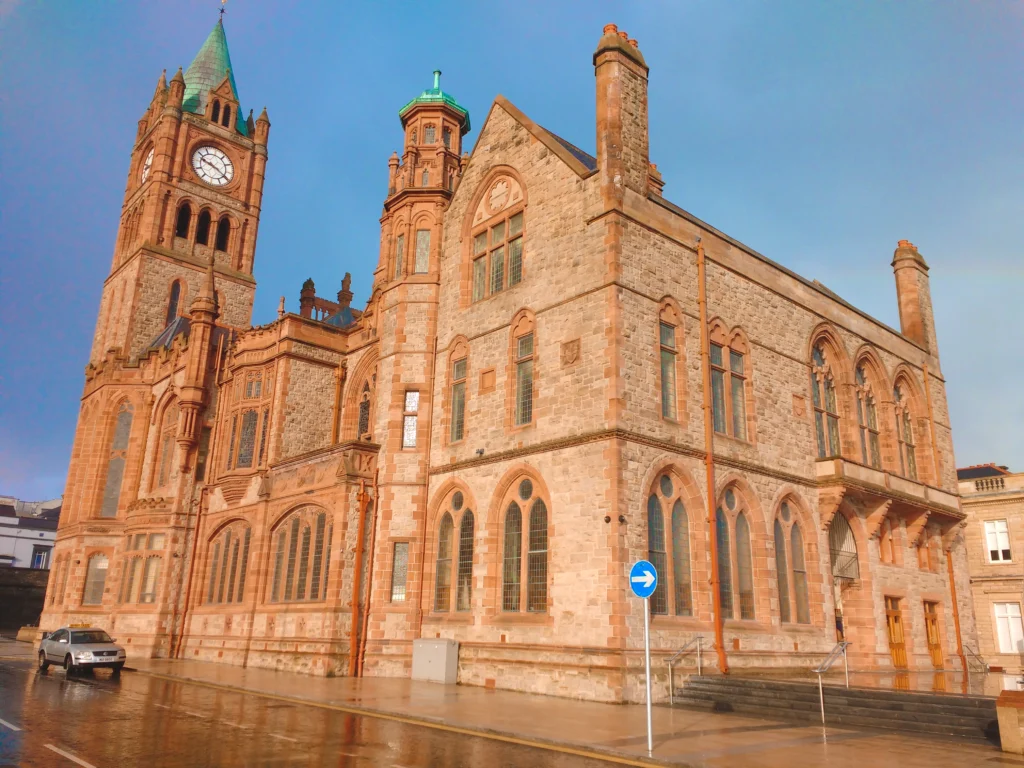
Friday evening’s discussion in Derry will explore race equity, gender inequality, intersectionality, lived experience, policy and justice.
Lilian Seenoi Barr added, “It will also consider how communities, institutions and allies can respond meaningfully to racism, anti-immigrant sentiment and structural inequality, while better understanding how different forms of
inequality overlap and shape people’s lives.”
‘Race, Gender and Justice’ runs from 6.30pm to 8.30pm and is open to the public. It warmly welcomes anyone interested in race, gender, justice, equality, heritage, community relations and inclusive policy-making.
But as spaces are limited, registration is essential. To secure your spot, pleaseclick on this link: https://shorturl.at/P8NHw
This event is part of the North West Migrants Forum’s Intercultural Cross Inclusion Programme, a project supported by PEACEPLUS, a programme managed by the Special EU Programmes Body (SEUPB).
It is also part of its Black Heritage NI: Hidden History Project, funded by The National Lottery Heritage Fund.